


Best Manual Coffee Grinder for Beginners
Table of Contents
- What Makes a Manual Coffee Grinder Right for You
- How to Choose a Manual Coffee Grinder
- Best Grind Size for Pour Over Coffee
- Manual vs. Electric Coffee Grinder: What Beginners Should Know
- Burr Grinder Maintenance Tips for Long-Term Use
- Getting Started: Your First Manual Grinder Setup
- Frequently Asked Questions
Last Updated: September 17, 2026
A manual coffee grinder is one of the best investments you can make if you're serious about brewing quality coffee at home. Whether you're preparing pour over, French press, or espresso, the grind consistency you achieve directly impacts extraction and flavor. Finding the best manual coffee grinder for beginners doesn't require spending hundreds of dollars, it requires understanding what actually matters in a grinder and matching those features to your brewing method.
Freshly ground coffee offers an immediate and dramatic difference compared to pre-ground beans. The difference is immediate and dramatic. In this guide, we'll walk you through exactly what to look for in a best manual coffee grinder for beginners, how to choose between different burr types, and how to maintain your grinder for years of reliable use.
What Makes a Manual Coffee Grinder Right for You
A manual coffee grinder puts you in complete control of your grind size and consistency. Unlike electric grinders that can generate heat and damage delicate coffee flavors, manual grinders work at your pace. You control the pressure, the speed, and the final particle size distribution.
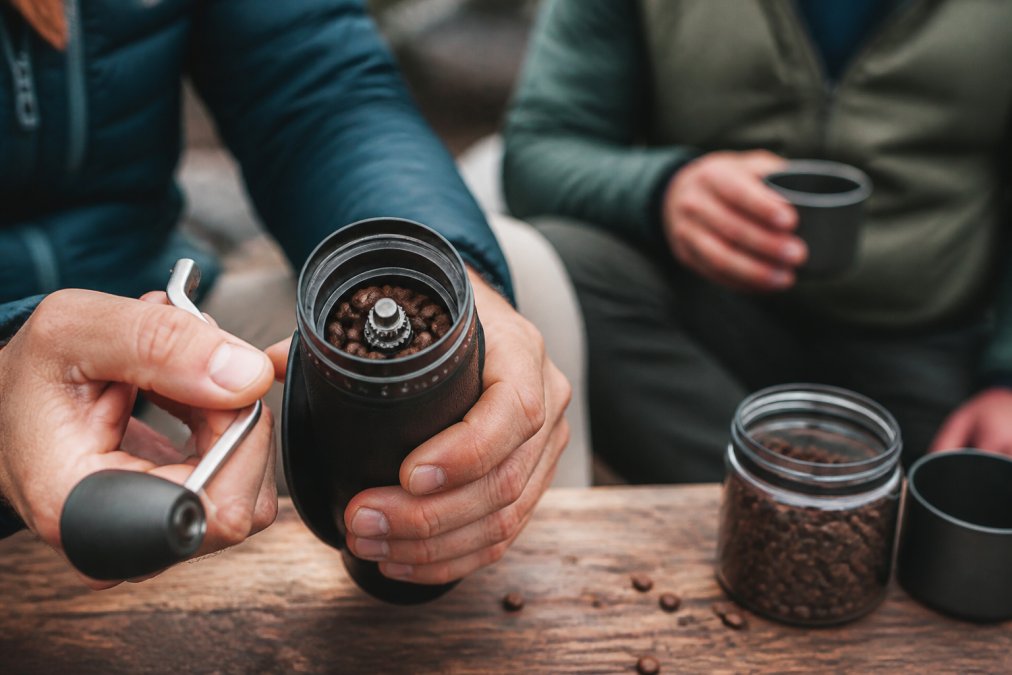
The real advantage of manual grinders for beginners is simplicity. No electrical components to fail, no complicated settings to navigate, no warranty issues. You get a mechanical device with conical burrs or stainless steel burrs that you operate by hand. Setup takes seconds. Cleanup takes less time than an electric grinder.
Manual grinders also force you to develop a feel for grinding. You'll learn how much pressure produces fine particles, how long it takes to reach your target consistency, and how bean density affects grind time. This hands-on approach builds coffee knowledge faster than any automatic grinder ever could.
How to Choose a Manual Coffee Grinder
Choosing the right grinder comes down to four core factors: burr type, grind consistency, physical effort required, and your brewing method. Let's break down each one.
Burr Type: Conical vs. Stainless Steel
Conical burrs are cone-shaped grinding surfaces that crush beans between a rotating inner cone and a stationary outer ring. They produce uniform particle size distribution with fewer fines (ultra-fine powder particles) and boulders (oversized chunks). Conical burrs work at slower speeds, which means less heat generation and better flavor preservation.
Stainless steel burrs are flat, parallel discs that shear beans into smaller pieces. They're durable, easy to clean, and less likely to jam with oily beans. However, they tend to produce a wider range of particle sizes and generate slightly more heat during grinding.
For beginners, conical burrs are the better choice. They're more forgiving if your technique isn't perfect, and the grind consistency matters more than durability at this stage. You're learning, and conical burrs reward patience while you develop your grinding rhythm.
Grind Consistency and Adjustment Range
The best manual coffee grinder for beginners offers a stepless adjustment or micrometric settings that let you dial in any grind size from ultra-fine espresso to coarse French press. This flexibility matters because different brewing methods require different particle sizes.
Adjustment should be smooth and reliable. You should be able to move from one setting to another without grinding getting stuck or producing inconsistent results. Some grinders use a numbered ring with discrete steps; others use a smooth dial. Both work, but stepless adjustment gives you more precision as your skills develop.
Check the adjustment range before buying. Entry-level grinders sometimes limit you to medium grinds, which won't work well for espresso or French press. You want a grinder that covers the full spectrum.
Physical Effort and Grind Speed
This is the part most guides skip, but it's critical for daily use. Manual grinding requires sustained physical effort. How much effort depends on bean density, grind fineness, and burr design.
Lighter roasts and finer grinds require more torque. If you're grinding for espresso every morning, you'll feel the difference between a grinder that takes 3 minutes and one that takes 8 minutes. Over time, repetitive grinding can cause hand and wrist fatigue.
Look for grinders with ergonomic handles that distribute pressure across your palm rather than concentrating it in your fingers. A good handle grip reduces strain significantly. Also check the hopper capacity, a larger hopper means fewer refills and a steadier grinding rhythm.
Best Grind Size for Pour Over Coffee
Pour over brewing requires a medium-fine grind, roughly the consistency of granulated sugar. This grind size allows hot water to flow through the coffee bed in 2.5 to 4 minutes, extracting flavors without over-extraction bitterness.
AeroPress Original Coffee and →
When you're learning to dial in your grinder, start with a medium-fine setting and brew a test cup. If the coffee tastes sour or under-extracted, move to a slightly finer grind. If it tastes bitter or over-extracted, go coarser. You'll find your sweet spot within 2-3 adjustments.
The advantage of a manual grinder is that you can make micro-adjustments between brews. Electric grinders often jump between settings, making it harder to find that perfect dial-in point. With a manual grinder, you have precise control.
Manual vs. Electric Coffee Grinder: What Beginners Should Know
Electric grinders are faster. You can grind enough coffee for multiple cups in under a minute. Manual grinders take 3-8 minutes depending on grind fineness and burr design.
Electric grinders are convenient for busy mornings. You press a button and walk away. Manual grinders require active participation, you're grinding while thinking about your day.
Electric grinders can overheat beans if used continuously. Manual grinders never generate enough friction to damage flavor. This matters more if you're grinding specialty coffee where flavor nuance is the whole point.
Electric grinders cost more upfront. Entry-level electric grinders start around $40-60. Quality manual grinders for beginners range from $25-80. Over 5 years of daily use, a manual grinder costs pennies per cup.
For beginners, a manual grinder teaches you more about the grinding process and forces you to slow down. You become intentional about your coffee ritual rather than rushing through it. If you want to upgrade to electric later, you'll understand why grind consistency matters and what to look for in a quality burr grinder.
Burr Grinder Maintenance Tips for Long-Term Use
A well-maintained manual grinder will outlast most electric models. But beginners often buy cheap grinders that fail within a year because they don't know what to look for in a repairable design. Here's what you need to know about maintenance and long-term durability.
Identify grinders with available spare parts before you buy. The single biggest durability advantage of quality manual grinders is that replacement burr sets, handles, and adjustment rings are available separately. Before purchasing, check whether the manufacturer lists replacement parts on their website or sells them through retailers. If spare parts aren't available, you're buying a disposable grinder. A grinder with accessible replacement burrs can function for 10+ years; one without will become landfill within 2-3 years of daily use.
Clean the burrs regularly to prevent premature wear. Every 2-3 weeks, disassemble your grinder and brush out coffee residue from the burr chamber. Use a soft brush, never water, which can cause rust on metal burrs and the adjustment mechanism. Some grinders come with a cleaning brush; if yours doesn't, a soft toothbrush works fine.
Getting Started: Your First Manual Grinder Setup
Once you've chosen your grinder, here's how to get the most from it immediately.
Frequently Asked Questions
What is the best manual coffee grinder for beginners?
The best manual coffee grinder for beginners balances ease of use, grind consistency, and durability. Look for a grinder with conical burrs, stepless or micrometric adjustment settings, and an ergonomic handle. Entry-level models should produce uniform particle size distribution without excessive physical effort. Consider your primary brewing method, pour over, French press, or espresso, since grind range requirements differ. Start with a grinder offering a wide adjustment range so you can dial in for multiple brew styles as you develop your skills.
How do I choose a manual coffee grinder for pour-over coffee?
Pour-over brewing requires a medium-fine, consistent grind. Choose a manual grinder with precise adjustment settings and conical burrs that deliver uniform particle size. Look for models with stepless or micrometric adjustment rings so you can fine-tune your grind without jumping between preset levels. A grinder with good build quality and dual bearing support will maintain calibration over time. Test the grind range to confirm it reaches the medium-fine consistency your pour-over method needs, and ensure the hopper capacity suits your typical brew volume.
Are manual coffee grinders any good?
Yes, manual coffee grinders are excellent for beginners and specialty coffee enthusiasts. They produce grind consistency comparable to electric burr grinders when equipped with quality conical or ceramic burrs. Manual grinders offer precise control over grind size, require no electricity, and are highly portable. The main trade-off is physical effort and grind time, expect 2-5 minutes depending on bean density and grind fineness. For daily use with small quantities or travel, manual grinders excel. They also tend to have lower retention, meaning less coffee gets trapped in the mechanism.
What maintenance do manual coffee grinder burrs need?
Manual coffee grinder burrs need regular cleaning to maintain grind quality and prevent rancid oil buildup. Disassemble your grinder monthly and use a cleaning brush to remove retained grounds from the burr chamber and adjustment ring. For deeper cleaning, run uncooked rice through the grinder to absorb oils, then brush out the residue. Check the drive shaft and dual bearing support for debris. Avoid water unless your grinder's manual explicitly permits it. Ceramic burrs are less prone to corrosion than stainless steel but require the same cleaning discipline. Proper maintenance extends grinder life and ensures consistent extraction quality.