


How to Store Coffee Beans to Maintain Freshness
Table of Contents
- The Four Enemies of Coffee Freshness
- Best Coffee Storage Canisters and Containers
- How Long Do Coffee Beans Stay Fresh
- Freezing Coffee Beans for Long-Term Storage
- Step-by-Step Storage Setup for Maximum Freshness
- Climate-Specific Storage Solutions
- Common Storage Myths and What Actually Works
- Frequently Asked Questions
Last Updated: September 19, 2026
The Four Enemies of Coffee Freshness
Understanding how to store coffee beans to maintain freshness starts the moment coffee is roasted, when it begins to lose flavor. Heat, light, moisture, and oxygen are the four enemies of coffee freshness. Understanding what damages your beans helps you store them correctly.
Heat and Temperature Fluctuations
Coffee degrades fastest in warm environments. High temperatures speed up oxidation and cause volatile compounds in the beans to escape. This is why pantry storage beats kitchen counters near appliances.
The ideal storage temperature stays between 50-70°F. Avoid places that heat up during the day. Kitchens near ovens or sunny windows are poor choices. Basements and cool closets work better.
Temperature swings hurt coffee as much as consistent warmth. When beans move between hot and cold, condensation forms inside the container. This moisture damages the flavor profile. Keep beans in a stable, cool spot.
Light and UV Exposure
Sunlight breaks down the compounds that make coffee taste good. UV exposure causes rapid degradation of flavor. Clear containers look nice but expose beans to damage.
Always choose opaque containers. Glass jars with dark tints work, but solid-colored canisters are better. Avoid any container you can see through. Keep beans away from windows and direct light.
Even indoor lighting matters over time. Fluorescent bulbs and bright LED lights can degrade coffee slowly. A dark cabinet protects beans far better than a lit shelf.
Moisture and Humidity
Coffee absorbs moisture from the air. Humid environments ruin beans faster than anything else. When beans absorb moisture, they swell and lose their crisp structure.
Kitchens and bathrooms are the worst places to store coffee. These rooms have high humidity levels. Bedrooms and dry closets are much better choices.
Keep beans away from sinks and dishwashers. Never store coffee above or below water pipes. Even small leaks nearby can damage your supply. Check your storage area regularly for signs of dampness.
Oxygen and Air Movement
Oxygen causes oxidation, which breaks down the flavor compounds in beans. The longer beans sit exposed to air, the flatter they taste. This is why whole beans last longer than ground coffee, ground coffee has more surface area exposed to oxygen.
Airtight containers stop oxygen from reaching beans. One-way valve bags let carbon dioxide escape during degassing while blocking oxygen from entering. This combination is ideal for fresh beans.
Never store coffee in paper bags or open containers. Even a loosely sealed jar lets oxygen in. Airtight seals are non-negotiable for maintaining freshness.
Best Coffee Storage Canisters and Containers
Choosing the right container makes a real difference. Not all storage vessels protect beans equally. The best containers block light, seal air tight, and resist moisture.
Airtight vs. Vacuum-Sealed Options
Airtight containers keep oxygen out. A good seal stops air movement completely. Glass or ceramic canisters with rubber gaskets work well for this.
Vacuum-sealed containers go further. They remove air before sealing, creating a stronger barrier against oxidation. Vacuum bags with one-way valves are excellent for long-term storage. They let carbon dioxide from degassing escape while keeping oxygen out.
For daily use, a simple airtight canister is enough. For storage beyond two weeks, vacuum-sealed options preserve flavor better. The investment in a quality vacuum container pays off if you buy beans in bulk.
Container Materials That Protect Peak Flavor
Glass canisters look good but let light through unless they're dark tinted. Ceramic and stainless steel containers block light completely and don't absorb odors. Plastic containers are affordable but can absorb coffee oils and flavors over time.
The best materials are opaque stainless steel or dark ceramic. These don't interact with the beans and create a strong seal. Avoid clear glass unless it's heavily tinted.
Check the seal quality carefully. Rubber gaskets should feel firm and sit flush in the grooves. A weak seal defeats the whole purpose of the container.
One-Way Valve Bags and Degassing
Fresh-roasted coffee releases carbon dioxide for several days. This off-gassing is normal and necessary. One-way valve bags let this gas escape without letting oxygen back in.
These bags are perfect for beans you buy directly from roasters. They keep beans fresh during the degassing period and beyond. The valve prevents oxygen from entering while pressure builds up inside.
Once beans stop degassing, transfer them to an airtight container for longer storage. One-way valve bags are best used in the first 2-3 weeks after roasting. After that, a sealed container works just as well.
How Long Do Coffee Beans Stay Fresh
Freshness depends on storage method and bean type. Whole beans last longer than ground coffee. Proper storage can extend freshness significantly.
Gourmia Digital Coffee Machine 12Cup →
Whole Bean vs. Pre-Ground Shelf Life
Whole beans stay fresh for 2-4 weeks when stored properly. The beans' exterior protects the interior from oxygen exposure. This is why whole beans are worth buying.
Ground coffee loses freshness in 1-2 weeks. Grinding increases surface area dramatically. More surface means more oxidation happens faster. Grind beans just before brewing for the best flavor.
If you must buy pre-ground coffee, store it in an airtight container in the freezer. This slows oxidation. Still, fresh whole beans are always superior.
Tracking Your Freshness Window
Check the roast date on the bag. This tells you when the beans were roasted, not when they were packaged. A roast date from 1-2 weeks ago is ideal for most brewing methods.
Mark your container with the date you opened it. This helps you track how long beans have been sitting in your home. Most beans taste best within the first month after opening.
Buy coffee in quantities you'll use within 3-4 weeks. Smaller, more frequent purchases beat buying large amounts that sit around.
Freezing Coffee Beans for Long-Term Storage
Freezing extends coffee freshness, but it requires careful technique. Done wrong, freezing damages beans. Done right, it can preserve flavor for months.
When Freezing Makes Sense
Freeze beans only if you won't use them within 4 weeks. Freezing is best for bulk purchases or rare beans you want to save. For regular weekly coffee, room-temperature storage is simpler and just as good.
Freeze beans in their original one-way valve bag if possible. The bag already protects them. If you're transferring beans, use an airtight container designed for freezer use.
Preventing Freezer Burn and Condensation
Freezer burn happens when moisture leaves the beans and forms ice crystals. This damages the texture and flavor. Condensation forms when frozen beans warm up and moisture condenses on the surface.
The key is preventing temperature swings. Once beans are frozen, keep them frozen. Don't take them out and put them back repeatedly. This creates condensation and degrades quality.
Use airtight containers that seal completely. Vacuum-sealed bags work best.
Step-by-Step Storage Setup for Maximum Freshness
Setting up proper storage takes just a few minutes. Follow these steps to keep beans fresh for weeks.
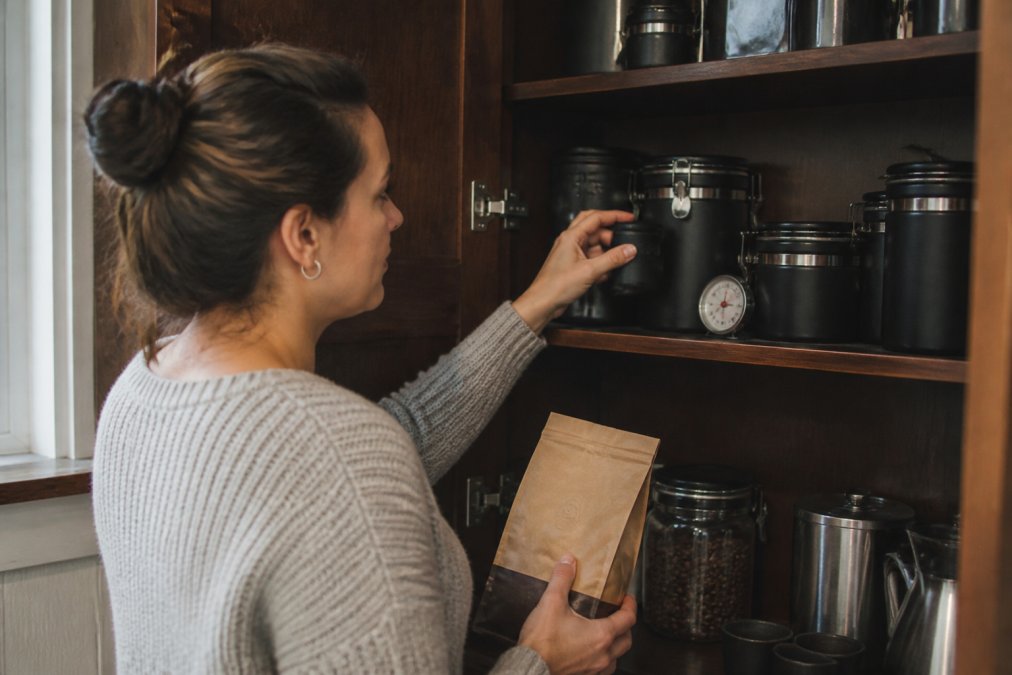
Step 1: Choose Your Storage Location
Pick a cool, dark, dry spot in your home. A bedroom closet, pantry away from the kitchen, or basement shelf works well. Avoid kitchens, bathrooms, and areas near windows.
Step 2: Select and Prepare Your Container
Choose an opaque, airtight container. Stainless steel or dark ceramic is best. Glass works if it's heavily tinted.
Step 3: Check the Roast Date and Plan Your Use
Look at the roast date on the bag before transferring beans. Beans roasted 1-2 weeks ago are ideal. Very fresh beans (less than 3 days old) are still degassing heavily.
Step 4: Monitor and Rotate Your Stock
Check beans weekly for signs of moisture or damage. Open the container briefly and smell the beans. Fresh coffee has a rich, pleasant aroma. Stale coffee smells flat and dull.
Climate-Specific Storage Solutions
Storage needs vary by region. Hot, humid climates require extra care. Cool, dry areas allow simpler setups.
Common Storage Myths and What Actually Works
Many people believe coffee stays fresh longer than it actually does. Other myths suggest storage methods that don't work.
Frequently Asked Questions
Is it okay to store coffee beans in a Ziploc bag?
Ziploc bags offer minimal protection against the enemies of coffee freshness. While they block some air, they do not provide an effective oxygen barrier and allow light and moisture to degrade your beans. Airtight canisters or opaque vacuum-sealed containers are far superior. If you must use a bag temporarily, squeeze out excess air, seal it tightly, and store it in a cool, dark pantry away from heat sources.
How long will coffee beans remain fresh?
Whole beans stay fresh for 2-4 weeks after the roast date when stored properly in an airtight container away from heat, light, and moisture. After opening, peak flavor window is typically 1-2 weeks. Pre-ground coffee degrades much faster, losing aroma and volatile compounds within days. Always check the roast date on your package and use beans within this freshness window for the best flavor profile.
Should coffee beans be stored in the refrigerator?
Refrigerators are not ideal for coffee storage because they expose beans to temperature fluctuations and moisture every time you open the door. Condensation can damage beans and promote staling. A cool, dark pantry or cabinet maintains stable conditions far better. If you must refrigerate, use an airtight, opaque container and minimize opening frequency. Freezing is a better option for long-term storage than refrigeration.
Can I still use 2-year-old coffee beans?
Two-year-old beans are well past their peak flavor window and have undergone significant oxidation and degradation. While they may be safe to use, the aroma and taste will be substantially diminished. The volatile compounds that create your coffee's flavor profile will have largely dissipated. For the best cup, use beans within 4 weeks of the roast date. Older beans are better composted than brewed.